Dog Raincoat Guide | How to Choose the Best Waterproof Jacket for Your Dog
A good dog raincoat keeps your pup dry, comfortable, and visible during wet weather walks. Whether you are dealing with spring showers, summer storms, or year-round drizzle, the right waterproof jacket protects your dog’s coat and skin from moisture that can lead to irritation, fungal infections, and that dreaded wet dog smell. This guide walks you through everything you need to know about choosing, sizing, and using a dog raincoat that actually works.
Why Your Dog Needs a Raincoat
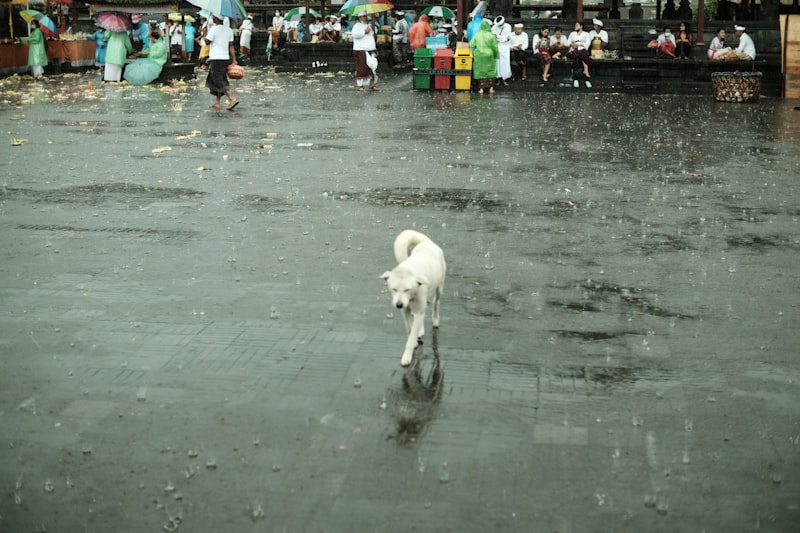
Some owners assume dogs handle rain just fine on their own. After all, wolves survive in the wild without waterproof gear. But domesticated dogs are not wolves, and many breeds have coats that absorb water like a sponge rather than repelling it.
Dogs with thin coats like Greyhounds, Whippets, and Chihuahuas lose body heat rapidly when soaked. Breeds with dense undercoats like Golden Retrievers and Huskies take hours to dry completely, creating a breeding ground for bacteria and hot spots. Short-nosed breeds like French Bulldogs already struggle with temperature regulation, and wet fur makes it worse.
A waterproof dog jacket also cuts down on the post-walk cleanup. No more toweling off a soaking dog, mopping muddy paw prints through the house, or dealing with a shivering pup who refuses to go outside when it rains. Many dogs who hate rainy walks actually just hate being wet. Give them a raincoat and the problem often disappears.
Types of Dog Raincoats
Dog rain gear comes in several styles, and the best one depends on your dog’s size, breed, activity level, and how much coverage they need.
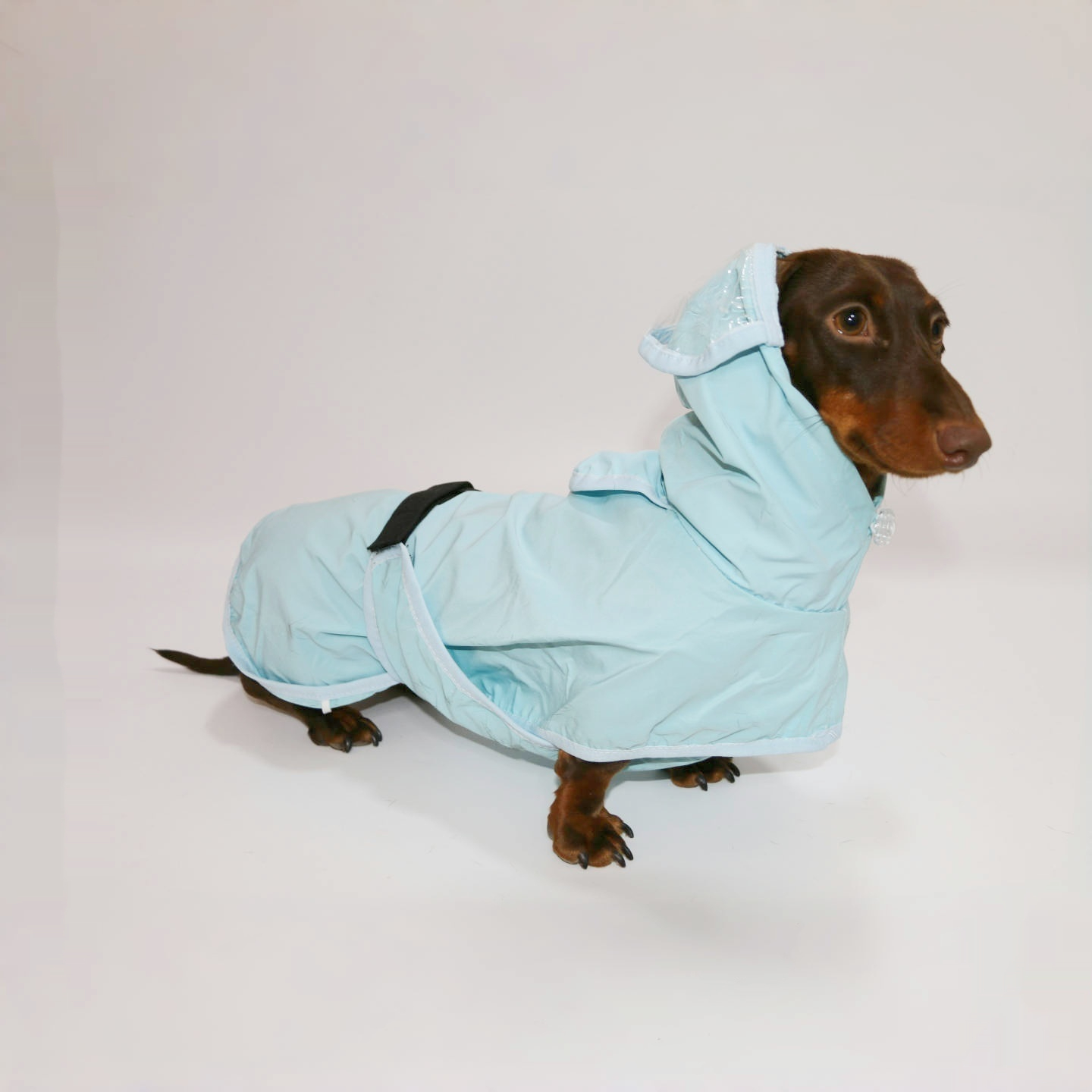
Poncho Style
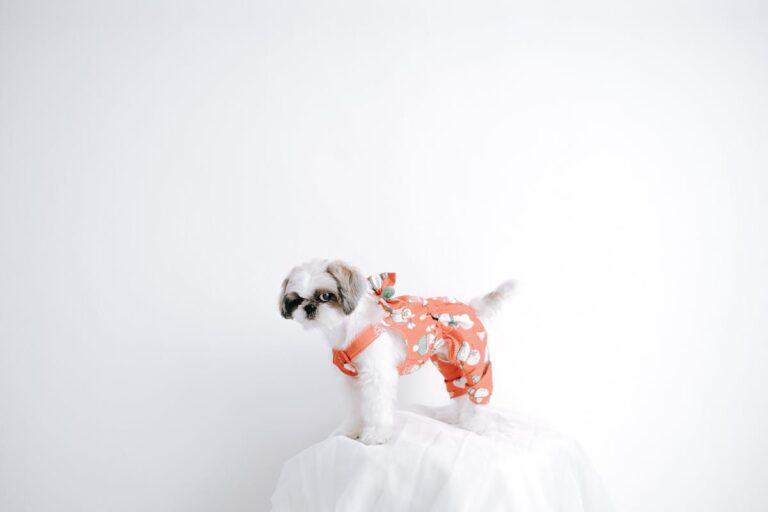
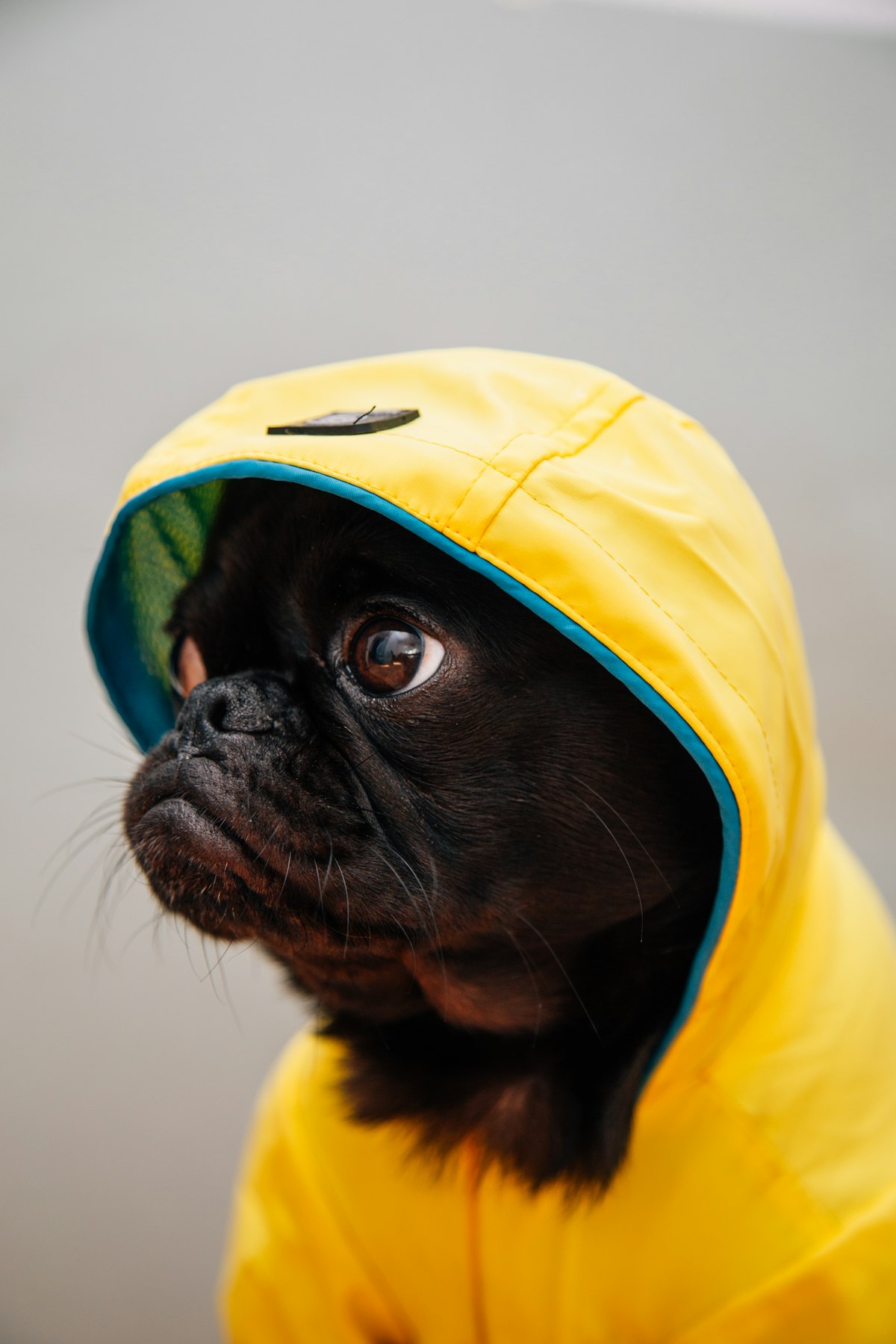
The simplest design. A poncho drapes over your dog’s back and secures with belly straps. These are easy to put on and take off, making them ideal for dogs who fidget during dressing. They cover the back and sides but leave the legs and belly exposed. Good for light rain and quick bathroom trips.
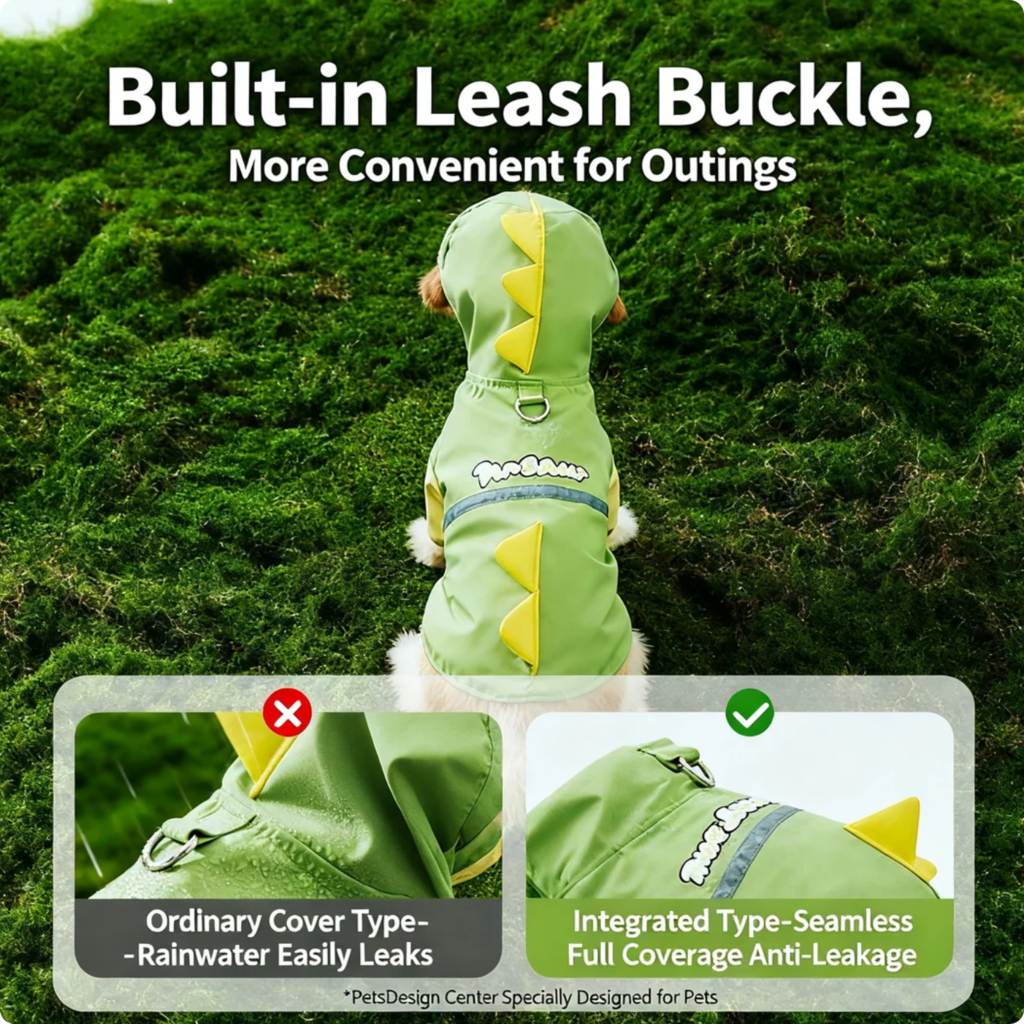
Full-Body Coverage Jackets
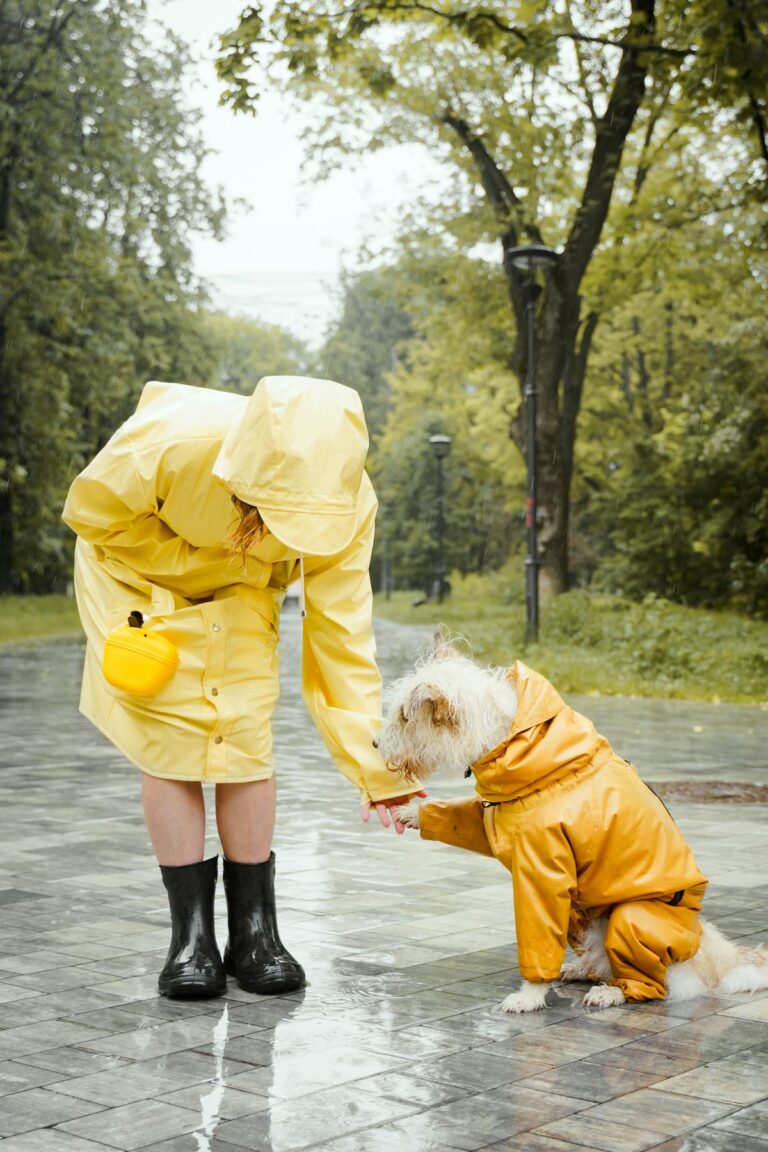
These wrap around the torso and extend down the legs for maximum protection. Four-leg designs keep your dog almost entirely dry, which matters for breeds prone to skin issues or for long walks in heavy rain. The tradeoff is they take longer to put on and some dogs need time to adjust to the leg coverings.
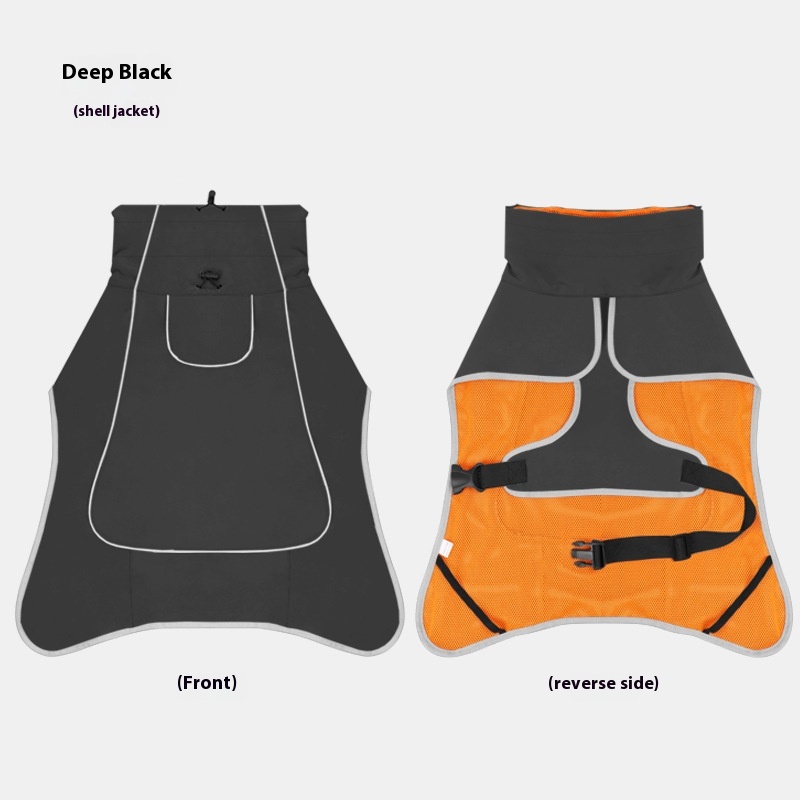
Shell Jackets and Trench Coats
Designed for larger breeds, shell jackets combine waterproofing with a more structured fit. They often include features like adjustable waist straps, reinforced stitching, and dual-purpose designs that work in rain and wind. These are the heavy-duty option for dogs who spend serious time outdoors in bad weather.
Shop Waterproof Dog Raincoats
Hooded Dog Poncho Raincoat | Dinosaur Dog Raincoat with Reflective Strips | Dog Shell Jacket – Waterproof Trench Coat
What to Look for in a Dog Raincoat
Not all raincoats are created equal. Here are the features that separate a good dog raincoat from one that ends up in the donation pile after two walks.
Waterproof Rating
Waterproof ratings measure how much water pressure a fabric can withstand before it leaks, expressed in millimeters. A 2,000mm rating handles light rain. For moderate to heavy downpours, look for 5,000mm or higher. Premium outdoor dog brands like Ruffwear use fabrics rated at 10,000mm and above for full storm protection. If the label just says water-resistant without a rating, expect it to soak through in anything more than a drizzle.
Breathability
A completely sealed raincoat traps heat and moisture from your dog’s body inside, which defeats the purpose. Good dog raincoats use materials like coated nylon or polyester that block rain from outside while allowing some vapor to escape from inside. This matters most for active dogs who generate a lot of body heat during walks.
Reflective Elements
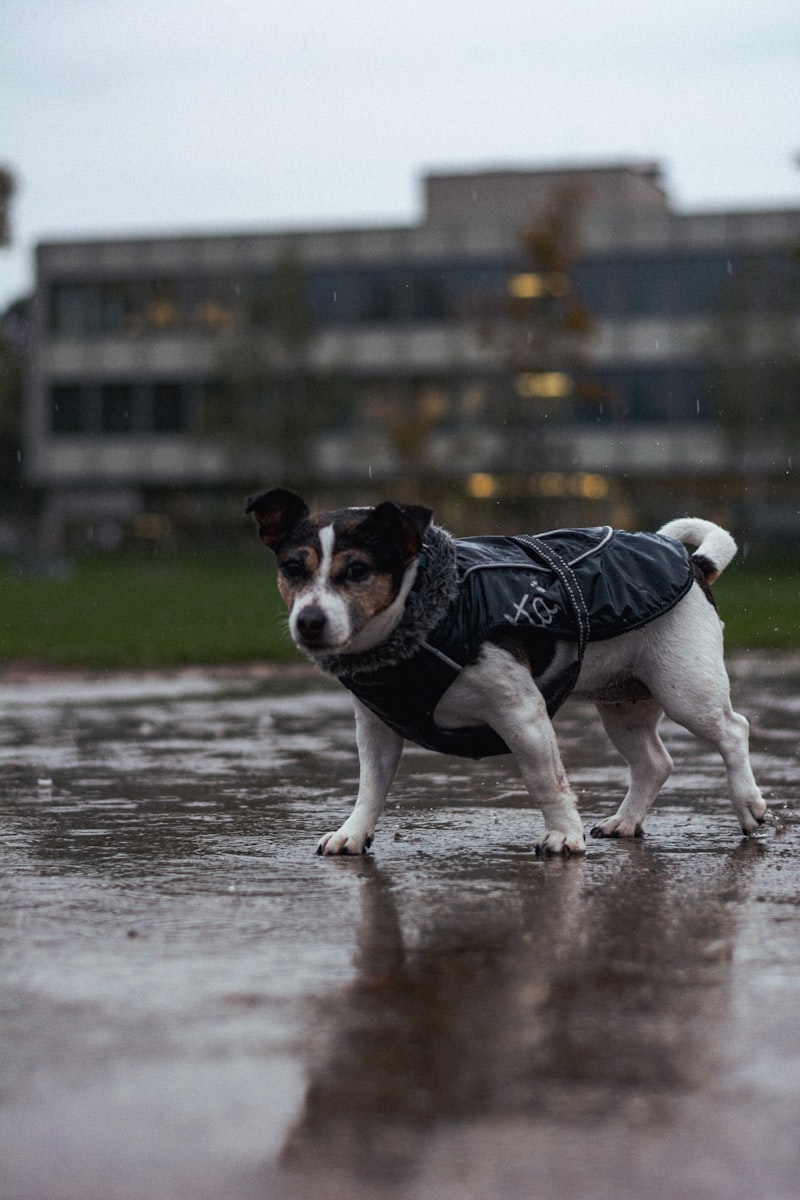
Rainy days mean low visibility. Reflective strips or piping on a dog raincoat make your dog visible to drivers, cyclists, and other pedestrians in dim conditions. This is not optional for dogs who walk near roads. Many modern dog raincoats include reflective detailing as standard, and you should prioritize this feature if you walk during dawn, dusk, or after dark.
Adjustable Fit
A raincoat that flaps around loosely in the wind is worse than no raincoat at all. It catches rain instead of shedding it, and the movement can spook nervous dogs. Look for adjustable belly straps, elastic leg openings, and drawstring or Velcro closures at the neck. The coat should fit snugly without restricting your dog’s stride or breathing.
Leash Access
Many dog owners forget this one until they are standing in the rain trying to figure out how to attach a leash. Quality raincoats include a harness opening or leash portal on the back so you can clip directly to your dog’s harness or collar without removing the coat.
How to Measure Your Dog for a Raincoat
Sizing a dog raincoat correctly prevents chafing, restricted movement, and water leaking in through gaps. You need three measurements.
Back length: Measure from the base of the neck where the collar sits to the base of the tail. This is the most important measurement and the one most size charts are based on.
Chest girth: Wrap a tape measure around the widest part of the ribcage, usually just behind the front legs. Add one to two inches for comfort, especially for deep-chested breeds like Boxers or Dobermans.
Neck circumference: Measure around the base of the neck where a collar would sit. The coat should be snug enough to keep water out but loose enough that you can fit two fingers between the coat and your dog’s neck.
If your dog falls between sizes, go up. A slightly loose raincoat can be adjusted with straps. A too-tight one will restrict movement and cause your dog to resist wearing it.
Complete the Rainy Day Kit
Waterproof Anti-Slip Dog Rain Boots (4-Pack) | Waterproof Reflective Dog Pants | Waterproof Windproof Dog Jacket
Getting Your Dog Used to Wearing a Raincoat
Some dogs put on a raincoat and trot outside like they have been wearing one their whole life. Others freeze, pancake to the floor, or try to rip it off. If your dog falls into the second camp, patience and positive association are the tools that work.
Start by letting your dog sniff the raincoat. Place it near their bed or food bowl for a day so it becomes a familiar object. Then drape it over their back without fastening it, offering treats and praise. Once they tolerate that, fasten it loosely indoors for short periods while playing or feeding them. Gradually increase the time and tighten the fit.
The first outdoor test should be in your yard or a familiar area, not in the middle of a downpour on a busy street. Let them walk around, sniff, and adjust to the feeling of the coat moving with their body. Most dogs accept a raincoat within three to five short training sessions.
Raincoat Care and Maintenance
A dog raincoat takes a beating. Mud, drool, puddle water, and general outdoor grime build up fast. Most dog raincoats can be hand washed with mild soap and warm water after each use. Avoid harsh detergents and fabric softeners, which can break down the waterproof coating over time.
Hang the coat to air dry completely before storing it. Stuffing a damp raincoat into a closet invites mold and mildew, which ruins the waterproofing and creates an unpleasant smell your dog will not appreciate. Some raincoats are machine washable on a gentle cycle, but always check the care label first.
Inspect the coat regularly for wear. Seams are the first place waterproofing fails, followed by high-friction areas around the legs and belly straps. Small tears can be patched with waterproof seam tape. If the entire coat starts letting water through, it is time for a replacement rather than trying to re-waterproof it.

Breed-Specific Rain Gear Tips
Small breeds (Chihuahuas, Yorkies, Pomeranians): These dogs chill fast. Choose a raincoat with some insulation or pair a waterproof shell with a fleece layer underneath. Full-body coverage is worth the extra effort since these dogs are close to the ground and catch splash from puddles and passing cars.
Medium breeds (Beagles, Corgis, Cocker Spaniels): The sweet spot for poncho-style coats. Medium dogs generally tolerate rain gear well and do not need the heavy-duty coverage that larger or smaller dogs require. Focus on good back coverage and reflective elements.
Large breeds (Labs, German Shepherds, Golden Retrievers): These dogs generate enough body heat to stay warm in most rain, but their thick coats absorb enormous amounts of water. A lightweight, breathable shell jacket with adjustable straps works best. Avoid insulated models since overheating during a walk is a real risk for large, active dogs.
Giant breeds (Great Danes, Mastiffs, Saint Bernards): Sizing is the main challenge. Most mass-market dog raincoats top out at XL, which often is not large enough. Look for brands that offer XXL or custom sizing. A poorly fitting coat on a giant breed creates more problems than it solves.
Waterproof Gear for Every Size
Reversible Waterproof Dog Winter Coat | Waterproof Windproof Dog Jacket (Med-Large) | Waterproof Reflective Dog Pants
When a Raincoat Is Not Enough
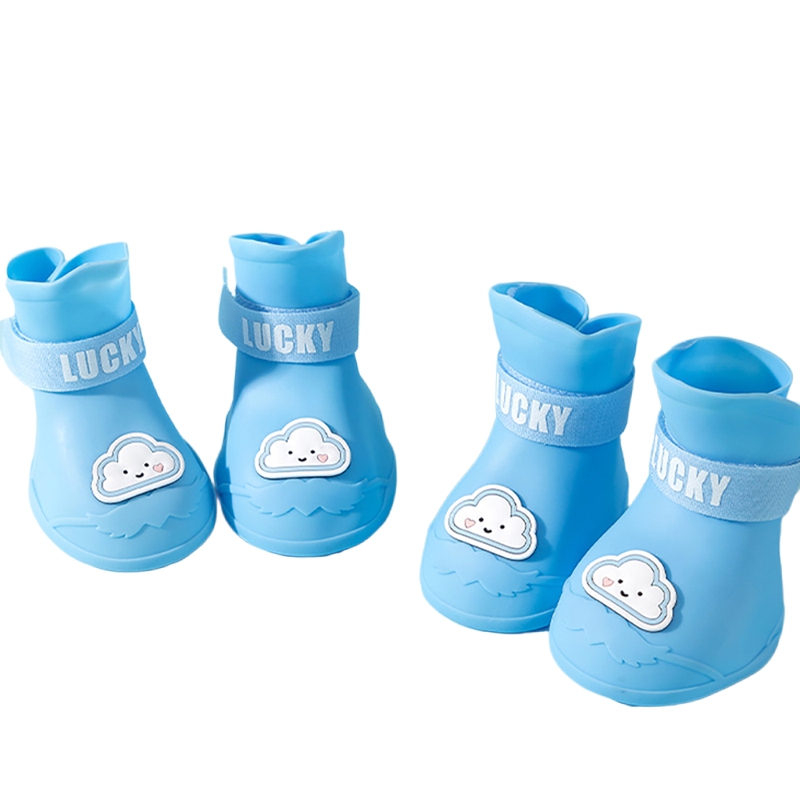
Heavy, sustained rain calls for more than just a jacket. Dog rain boots protect paws from standing water, road salt residue, and sharp debris hidden by puddles. Waterproof dog pants add coverage for the belly and legs, keeping your dog almost entirely dry in the worst conditions.
For dogs who truly hate rain and will not walk regardless of what gear they wear, consider adjusting your routine. Shorter, more frequent walks during breaks in the rain work better than one long walk in a downpour. Indoor play and puzzle toys can supplement exercise on the worst weather days.
A quality dog raincoat is an investment in your dog’s comfort and health. It reduces post-walk grooming time, prevents skin issues caused by prolonged wetness, and makes rainy days something your dog can handle rather than dread. Measure carefully, introduce the coat gradually, and pick a style that matches your dog’s size and activity level. Rain walks might even become your new favorite routine together.