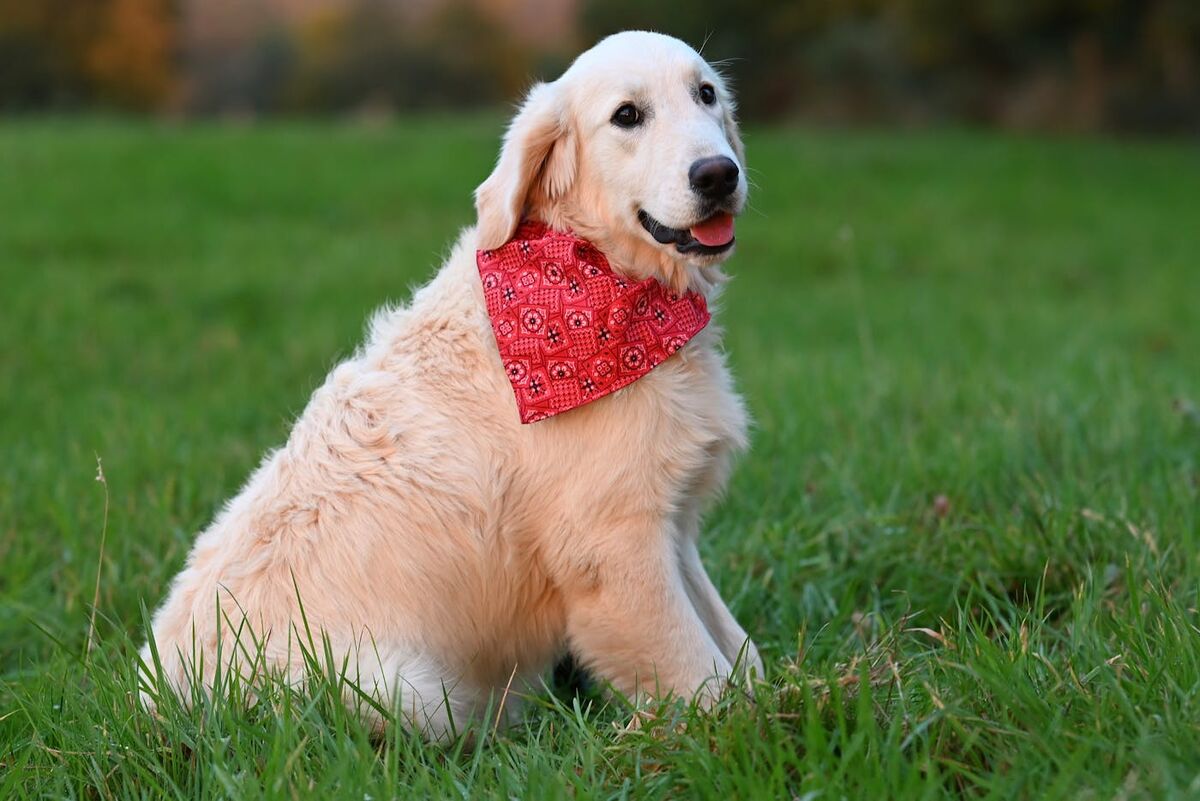
How to Tie a Dog Bandana: 5 Easy Styles & Safety Tips
Learning how to tie a dog bandana is one of the easiest ways to add personality and charm to your pup’s everyday look. A properly tied bandana sits comfortably below the collar, stays secure on walks, and frames your dog’s face beautifully — all without restricting movement or airflow. Whether you’re heading to the dog park, a birthday party, or just snapping photos in the backyard, the right bandana tie transforms a plain accessory into a polished style statement.
In this guide, you’ll learn five different ways to tie a dog bandana, how to choose the right size for your breed, what materials work best, and how to keep your dog comfortable and safe while wearing one.
Why Dog Bandanas Are More Than Just Fashion
Dog bandanas have surged in popularity over the past decade — and for good reason. Beyond aesthetics, a well-fitted bandana can serve practical purposes: some owners use bandanas soaked in cool water during hot weather as a mild cooling aid, while others use patterned bandanas as a subtle “in training” or “nervous dog” signal to strangers. Bandanas are also far less restrictive than full outfits, making them ideal for dogs that resist clothing.
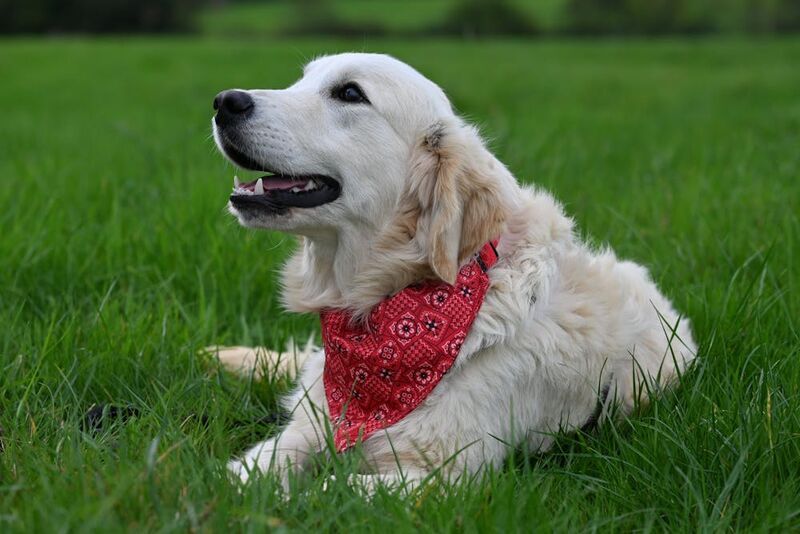
A golden retriever models the classic triangle-fold bandana — simple, secure, and endlessly stylish.
According to a 2023 survey by the American Pet Products Association, over 40% of dog owners purchase fashion accessories for their pets at least once per year. Bandanas rank among the most popular choices because they’re affordable, easy to put on, and available in hundreds of patterns and fabrics. The key is knowing how to tie one correctly so it stays put without causing discomfort.
How to Measure Your Dog for the Right Bandana Size
Before you learn how to tie a dog bandana, you need the right size. A bandana that’s too small won’t reach around the neck, and one that’s too large will droop, snag, or become a tripping hazard. Here’s how to get the measurement right:
- Measure neck circumference: Use a flexible measuring tape around the base of your dog’s neck, where the collar sits. Note the measurement in inches.
- Add 6–8 inches: This gives you enough fabric to tie a secure knot with tails that don’t hang too long. For a Chihuahua with a 10-inch neck, you want a bandana with a longest edge of at least 16–18 inches.
- Choose bandana size by breed category:
| Dog Size | Example Breeds | Recommended Bandana Size |
|---|---|---|
| Extra Small | Chihuahua, Yorkshire Terrier | 9–11 inch square |
| Small | Shih Tzu, Pomeranian, Pug | 14–16 inch square |
| Medium | Beagle, Border Collie, Shiba Inu | 18–20 inch square |
| Large | Labrador, Golden Retriever, Husky | 22–26 inch square |
| Extra Large | Great Dane, Saint Bernard, Mastiff | 27+ inch square (or use a full-size human bandana) |
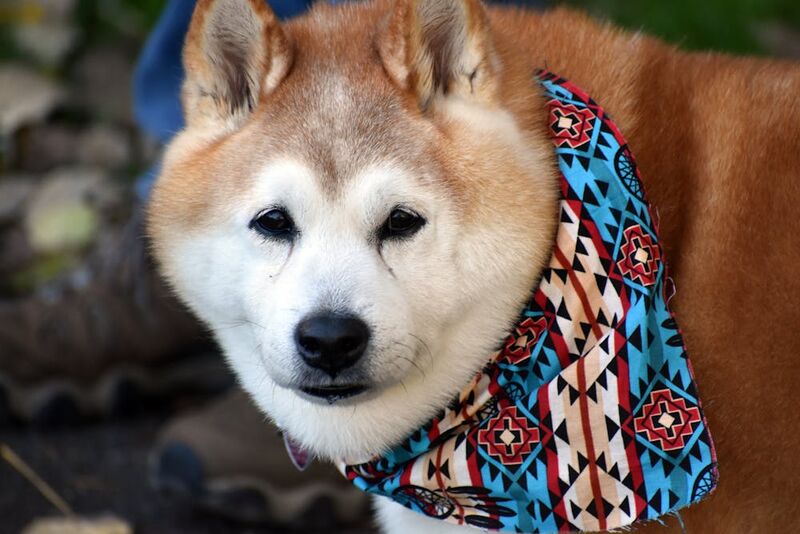
A medium-sized bandana fits this Shiba Inu perfectly — the triangle point sits centered on the chest.
The Safety Rule Every Dog Owner Needs to Know
Before any style discussion, safety comes first. A dog bandana should never restrict breathing, movement, or body temperature regulation. Follow this non-negotiable rule: you should be able to slide two fingers between the bandana and your dog’s neck once it’s tied. If you can’t, loosen it. If you can fit more than three fingers, tighten the knot or choose a smaller bandana.
Additional safety tips:
- Never leave a bandana on unsupervised: Dogs can chew, get bandanas caught on objects, or overheat. Remove it when you leave the room or when your dog goes to sleep.
- Avoid neck bandanas on brachycephalic breeds: French Bulldogs, Pugs, and Bulldogs already struggle with airflow. A collar-style bandana adds unnecessary pressure. Use a back-clip or harness attachment instead.
- Check for rubbing: After 30 minutes of wear, check under the bandana for any redness, irritation, or matting.
- Remove in hot weather unless soaked: Dry fabric traps heat. In summer, either remove the bandana or briefly soak it in cool water first.
5 Ways to Tie a Dog Bandana
There’s no single “right” way to tie a dog bandana — each method creates a different look and suits different occasions. Here are five techniques, from the most common to the most fashionable.
Style 1: The Classic Triangle Fold (Most Popular)
This is the standard dog bandana style you see everywhere, and for good reason — it’s easy, secure, and flatters almost every breed.
- Lay the bandana flat in a square orientation.
- Fold it in half diagonally to form a triangle.
- Wrap the bandana around your dog’s neck so the triangle point hangs down toward the chest.
- Bring both ends up behind the neck and tie a square knot (right over left, then left over right).
- Check the fit using the two-finger rule. Trim long tails or tuck them under if they hang past the shoulder blades.
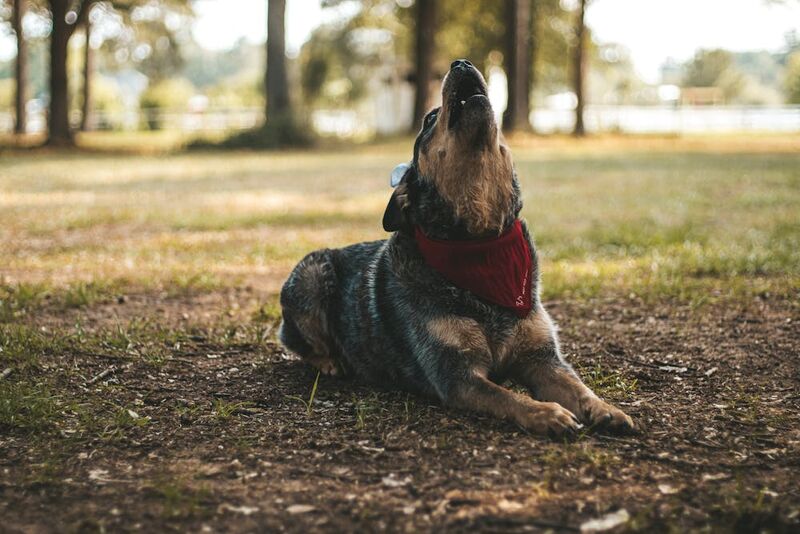
The classic triangle fold is secure, adjustable, and works on all breeds and sizes.
Style 2: The Rolled Bandana (The Dapper Look)
This method creates a sleeker, more polished appearance — great for formal events or special occasions.
- Fold the bandana into a triangle as described above.
- Starting from the triangle point, fold the tip up about 1 inch toward the long edge.
- Continue rolling the bandana toward the long edge until you have a thick strip, roughly 1.5–2 inches wide.
- Wrap the strip around your dog’s neck and tie a square knot at the side or back.
- Adjust the knot position so it sits neatly to one side — this creates a stylish “ascot” effect.
Style 3: The Over-the-Collar Slide (No-Knot Method)
This is the easiest method for dogs who don’t tolerate having things tied around their necks. You need a bandana with two fabric loops sewn onto the long edge (sold as “over-the-collar” bandanas) — or you can fold a regular bandana to create a loop.
- Remove your dog’s collar.
- Thread the collar through both fabric loops on the bandana’s back edge (or through a folded channel you’ve created).
- Re-attach the collar to your dog as normal.
- Adjust the bandana so the triangle or design faces forward on the chest.
This method is the most secure for active dogs since there’s no knot to loosen during play or running. It’s also the safest option because the bandana can’t tighten — it’s fixed to the collar width.
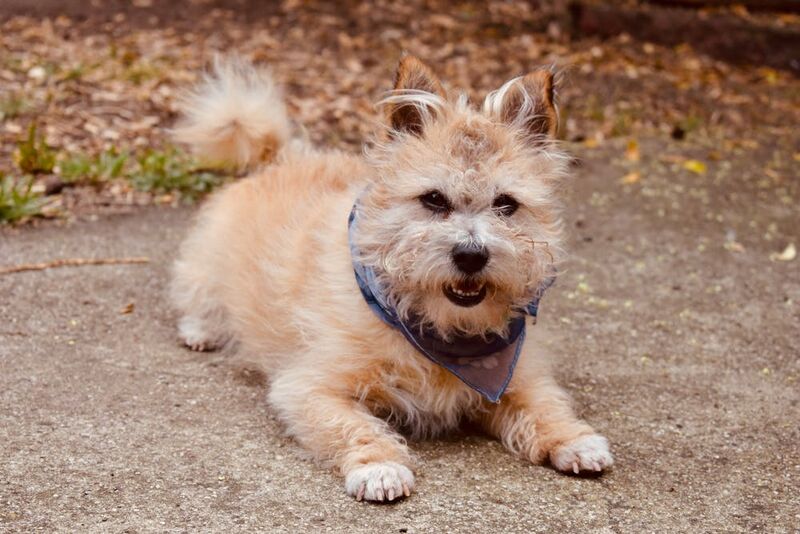
Over-the-collar bandanas stay put during walks, runs, and play — no retying needed.
Style 4: The Cape Style
Instead of centering the bandana triangle on the chest, the cape style positions it on the back — creating a superhero silhouette that’s adorable on larger dogs.
- Fold the bandana into a triangle.
- Position the bandana so the triangle hangs down the dog’s back, with the long edge at the collar.
- Bring both ends forward under the neck and tie a knot at the front, below the chin.
- Check that the knot isn’t pressing against the throat — there should be at least one inch of clearance.
This style is particularly striking on active breeds like Border Collies, Huskies, and Australian Shepherds. Just be mindful that back-positioned fabric can snag on objects during off-leash play.
🐾 Dress Your Dog in Style
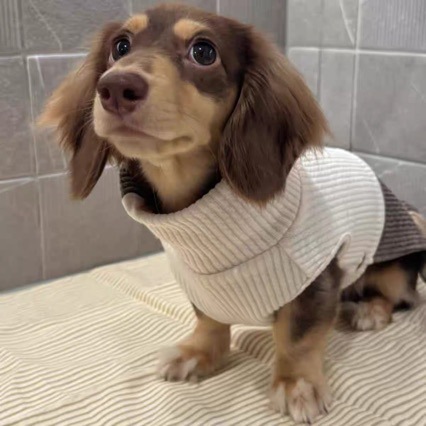
Pair your dog’s new bandana look with a cozy, stylish sweater for the complete outfit.
Style 5: The Side Knot (Casual and Trendy)
Side knots have been trending in dog fashion circles because they look effortless and casual — like your dog just threw something on before heading out.
- Fold the bandana into a triangle, then roll it into a strip about 2 inches wide.
- Wrap it around your dog’s neck like a collar.
- Instead of tying the knot at the back or front, pull the ends to one side and tie a loose half-bow or casual knot there.
- Let one tail hang slightly longer than the other for a relaxed, asymmetric look.
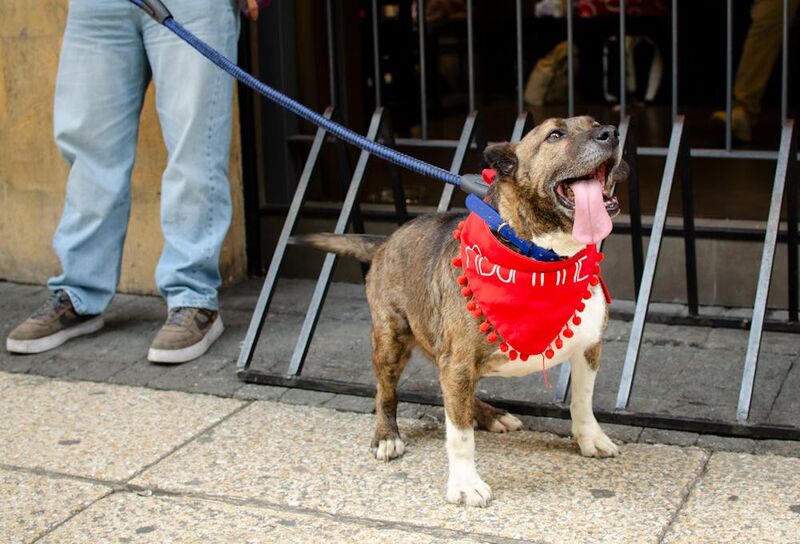
Side-knot bandanas give a laid-back, street-style look that photographs beautifully.
Watch: 5 Ways to Tie a Dog Bandana (Video Tutorial)
If you prefer to see these techniques in action, this video walkthrough demonstrates each style step-by-step on a real dog:
Choosing the Right Fabric for Dog Bandanas
Not all bandana fabrics are created equal. The material affects comfort, durability, and safety — especially for dogs with sensitive skin or heavy coats.
Cotton
The most popular choice. Cotton is breathable, washable, gentle on fur, and available in thousands of prints. Standard quilting cotton (100%) works year-round and is the safest choice for dogs with skin sensitivities. Avoid rough or stiff cotton blends that can cause friction against the neck.
Flannel
Soft and warm — ideal for autumn and winter. Flannel bandanas add cozy texture to cold-weather outfits without being stiff. They’re particularly well-suited to short-haired breeds that feel the cold more acutely.
Linen
Light and airy — perfect for summer. Linen is more breathable than cotton and dries quickly if your dog gets wet. It wrinkles easily, which actually adds to its casual charm. A great choice for beach days or warm-weather festivals.
Bandana Fabrics to Avoid
- Polyester: Traps heat and doesn’t breathe well. Bad for warm weather.
- Wool: Can cause itching and skin irritation, especially around the neck where friction is constant.
- Synthetic blends with elastic: While they seem convenient, elastic neck bandanas can tighten as dogs move — a serious choking risk if the elastic degrades or snags.
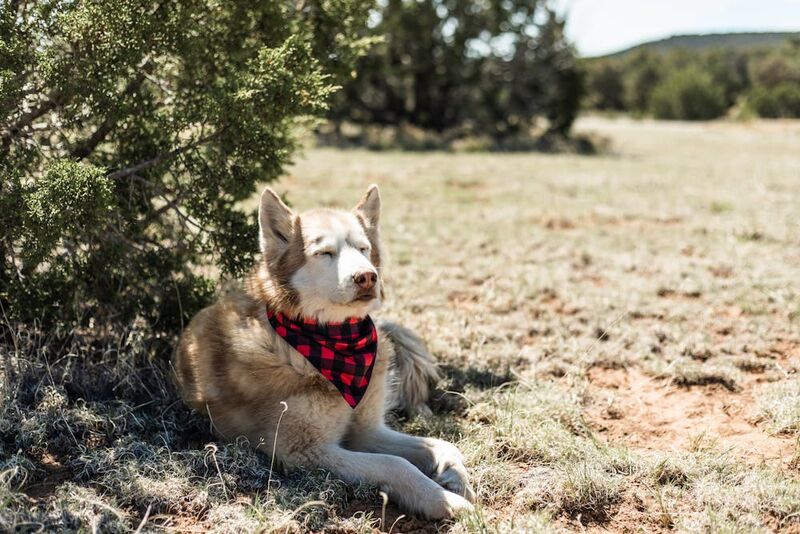
Huskies and heavy-coated breeds do well with lightweight cotton or linen bandanas that don’t add bulk.
🐶 Complete the Look with a Dog Hoodie
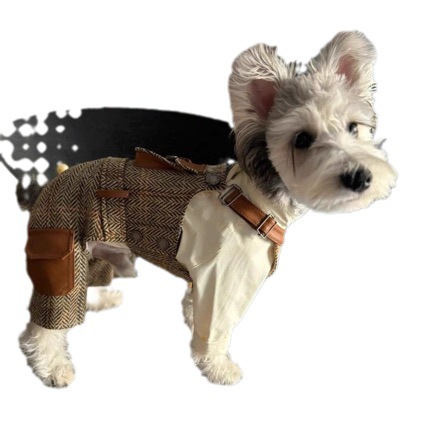
Layer a bandana over a cozy dog hoodie for a complete, coordinated outfit that’s both warm and stylish.
How to Keep a Bandana on an Active Dog
Some dogs are natural bandana-wearers — it goes on, they ignore it, everyone wins. Others immediately reach for the knot the moment you turn around. If your dog falls into the second camp, here are proven strategies for keeping the bandana on:
- Use the over-the-collar method: This is the most escape-proof approach since the bandana is anchored to the collar.
- Try a snap closure: Some bandanas come with snap buttons instead of requiring a knot — these are more resistant to pawing.
- Introduce bandanas gradually: Start with 5-minute sessions while distracting your dog with treats or play. Build duration over several days.
- Tie the knot at the back: Dogs find it harder to reach knots at the back of the neck compared to the front or side.
- Use a slightly tighter fit: Not tight enough to restrict breathing, but snug enough that the bandana doesn’t swing around and attract attention. The two-finger rule still applies — but two fingers snugly, not loosely.
Dog Bandana Color Psychology: What Does Your Dog’s Bandana Say?
This might sound frivolous, but dog bandana colors have developed an informal signaling system within the dog-owner community — particularly useful at busy dog parks or events.
- Red: Confident, classic — the most popular color choice. No specific signal.
- Yellow: In some communities, yellow signals “nervous dog” or “needs space.” Widely used in the UK and Australia, growing in the US.
- Green: “Friendly, approachable dog” — some owners use this to signal their dog welcomes interaction.
- Orange: “Caution — unpredictable around strangers or other dogs.” Similar usage to yellow in many regions.
- Blue: Sometimes indicates a working or service dog in training — be cautious about approaching.
These signals aren’t universal standards, but they’re widely enough recognized that it’s worth being aware of them when choosing your dog’s bandana color for public outings.
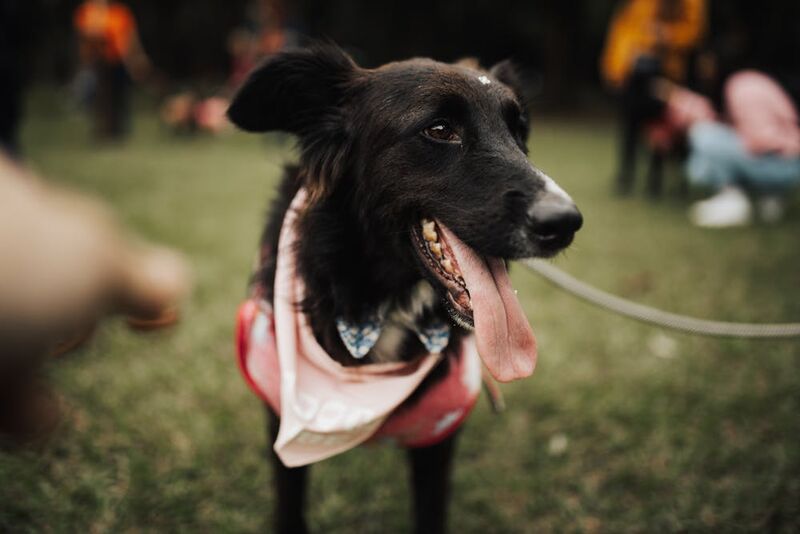
Bandana colors can carry informal signals in dog-owner communities — helpful to know at busy parks.
Washing and Caring for Dog Bandanas
Bandanas take a beating — drool, food, dirt, and outdoor grime accumulate fast. Here’s how to keep them clean and long-lasting:
- Wash after every 2–3 wears or immediately after any wet or dirty outing.
- Machine wash on cold with mild, fragrance-free detergent. Harsh fragrances can irritate your dog’s sensitive nose when worn close to the face.
- Air dry when possible — tumble drying on high heat can shrink cotton bandanas or damage printed fabrics.
- Check for wear after every wash: Look for fraying edges, weakened fabric near the knot points, or fading that might indicate UV degradation. A bandana with worn edges can unravel and become a choking hazard.
- Iron on low heat if needed — a crisp, flat bandana sits better around the neck and photographs more cleanly.
Pairing Bandanas with Dog Collar Styles
The right collar makes a significant difference in how a bandana looks. A bandana worn over a thick, padded collar will sit higher up the neck than one worn over a slim flat collar — and the triangle point will hang at a different angle. For the cleanest look:
- Slim flat collars (nylon or leather, 3/4 inch wide) pair best with bandanas — the bandana sits naturally and the collar is barely visible.
- Martingale collars work well for the slide-on method since they’re designed to sit at specific positions on the neck.
- Thick or padded collars can push the bandana forward, causing it to bunch or ride up — consider the rolled method with these collar types.
For more on collar styles and how they affect your dog’s comfort and appearance, check out our complete guide to dog collar styles.
✨ Explore All Dog Fashion at Hawa Pets
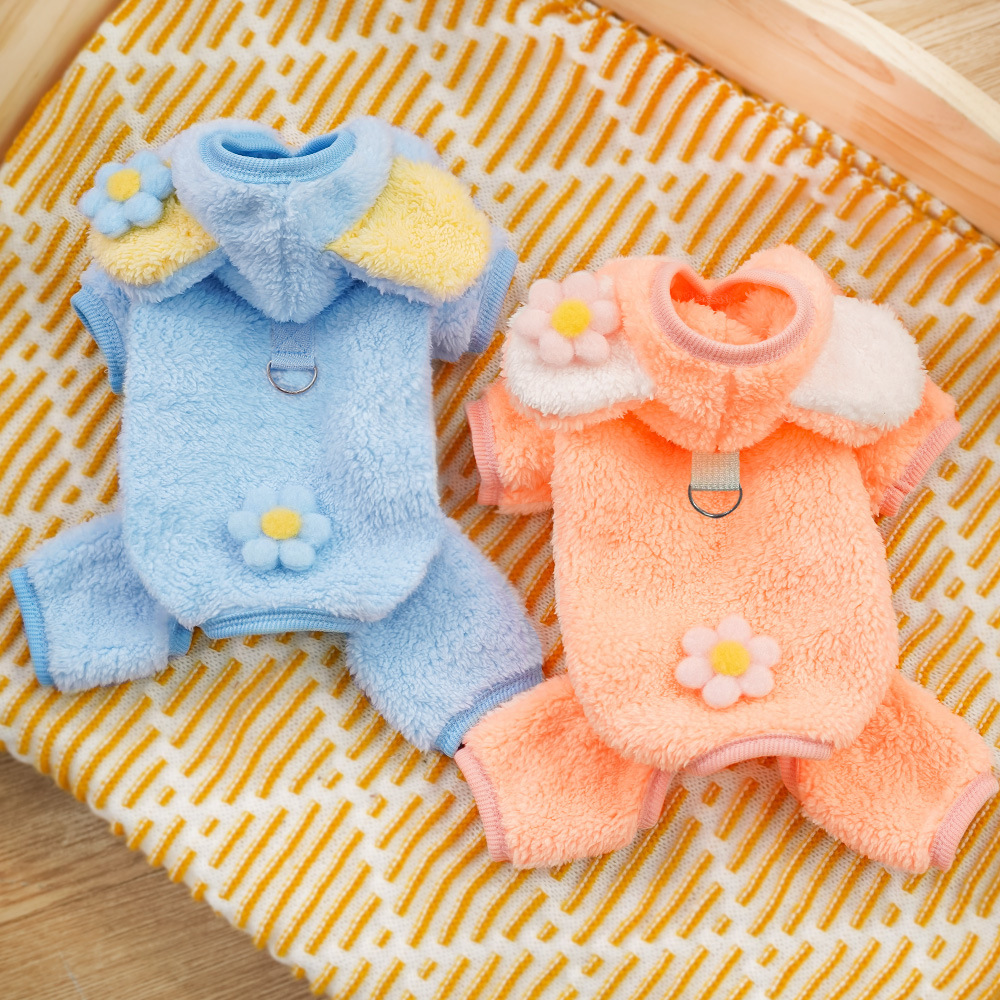
From bandanas to full outfits — browse our complete dog fashion collection for every season and occasion.
Seasonal Bandana Ideas for Dogs
One of the best things about dog bandanas is how easily you can rotate them with the seasons. Here are styling ideas for each time of year:
Spring
Floral prints, pastel checks, and light cotton fabrics. Spring is the peak season for stylish dog fashion — coordinate your dog’s bandana with outdoor activities and the season’s colors. Pastel yellows, soft greens, and light pinks photograph beautifully against fresh grass and blooming flowers.
Summer
Tropical prints, beach-themed patterns, and bright solids. Use linen or light cotton. For very hot days, dampen the bandana slightly before tying — the evaporative cooling effect provides mild temperature relief, though it’s not a substitute for shade and water.
Autumn
Plaid, tartan, and earth tones. Flannel bandanas come into their own in autumn — the warm texture complements falling leaves and seasonal backdrops perfectly. Burnt orange, rust red, and forest green are classic autumn choices.
Winter
Fair Isle patterns, festive prints, and thicker fabrics. Layer a bandana over a dog sweater or hoodie for layered cold-weather style. For dogs with thin coats, the bandana can add a small amount of warmth around the neck — though a proper winter dog coat is always the priority for warmth.
Quick Reference: How to Tie a Dog Bandana
Here’s the core method summarized for quick reference:
- Fold bandana diagonally into a triangle
- Wrap long edge around dog’s neck, triangle pointing forward/down
- Pull both ends behind the neck
- Tie a square knot (right-over-left, then left-over-right)
- Check fit: two fingers between bandana and neck
- Trim or tuck excess tails
That’s all it takes. Once you’ve done it a few times, the whole process takes under 30 seconds.
Sources
- wikiHow: How to Tie a Bandana on a Dog — Step-by-step photo guide with 9 illustrated steps, updated March 2025.
- American Kennel Club: Dog Accessories Guide — AKC guidance on safe dog accessories and fitting standards.
- Mimi Green: How to Tie a Dog Bandana Safely and Comfortably — Safety-focused guide including the two-finger rule and material recommendations, June 2025.
- American Pet Products Association: 2023-2024 Pet Industry Survey — Industry data on pet accessories purchasing trends.