Reflective Dog Gear: 9 Essential Pieces for Safe Night Walks
Reflective dog gear is the single most affordable upgrade that makes night walks measurably safer for you and your dog. Drivers can spot a dog wearing a reflective vest or LED collar from more than 500 feet away — roughly four times farther than an unlit dog in dark fur. This guide walks through the nine pieces of reflective dog gear every owner should consider before the sun sets on another walk.
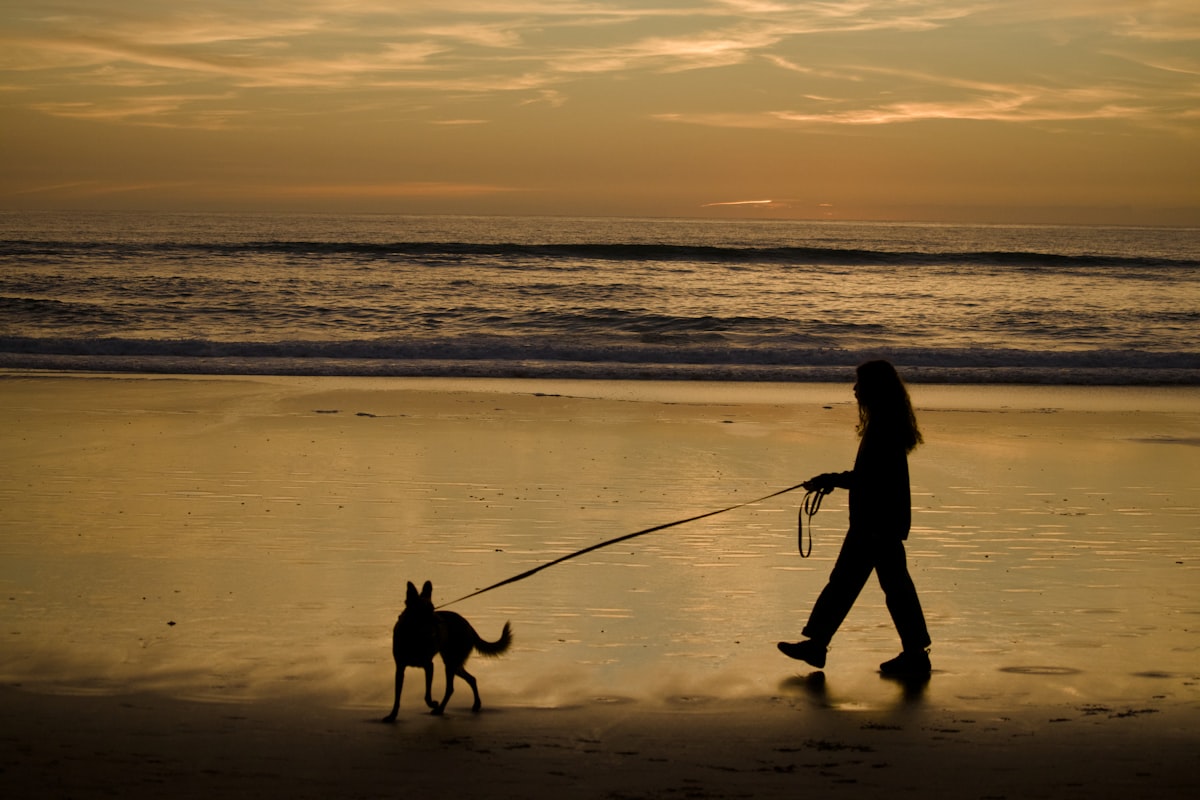
Early-morning commuters, after-work walkers, and anyone whose dog needs a last bathroom break before bed all share the same hidden risk: poor visibility. The National Highway Traffic Safety Administration reports that 76% of pedestrian fatalities occur in dark conditions, and dogs — closer to the ground and smaller than a human — are even harder for drivers to see. The fix is not expensive. A complete reflective dog walking gear setup starts under forty dollars and pays for itself the first time a car slows down instead of swerving.
Why Reflective Dog Gear Matters for Night Walking Safety
Reflective materials bounce headlight beams straight back to the driver, creating a bright flash that the human eye picks up from far away. Retroreflective tape — the kind used on school buses and road workers’ vests — can be spotted from 500 to 1,500 feet at night, according to Federal Highway Administration research. Without it, a dark-coated dog disappears at roughly 150 feet — which, at 35 mph, gives a driver less than three seconds to react.
The math gets worse in rain or fog. Water droplets scatter headlight beams, so reflective surfaces actually outperform passive dark colors by a wider margin in wet weather. That makes reflective dog gear most useful precisely when walks already feel sketchiest: dusk in winter, light drizzle after work, or a quick potty break in pre-dawn dark.
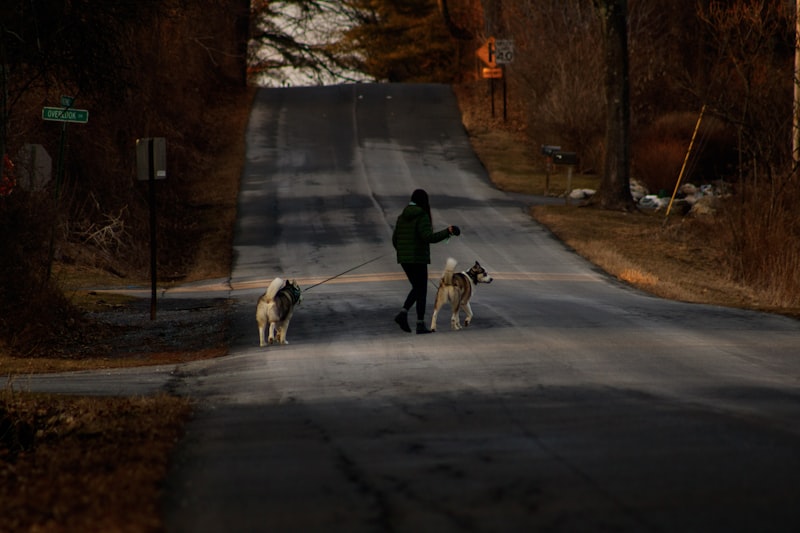
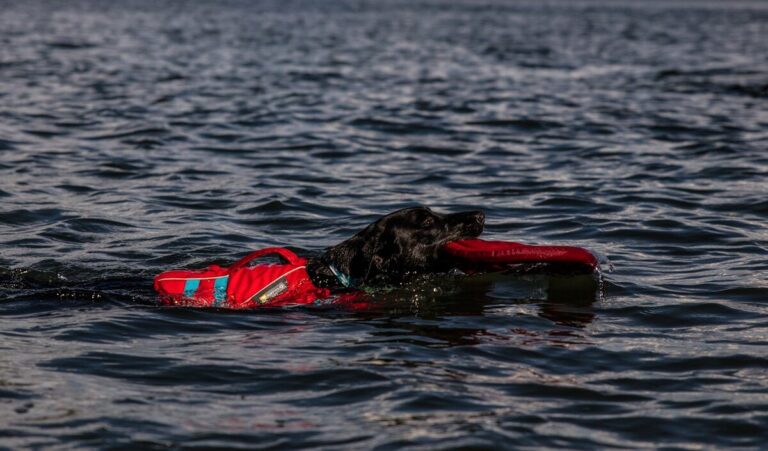
Beyond visibility to drivers, reflective dog gear also helps you find your dog if the leash slips or a startled pup bolts. A reflective dog harness spotted across a dark field is easier to chase than a dark silhouette that merges with shrubs. Search-and-rescue handlers have used reflective vests on working dogs for decades for exactly this reason.
1. Reflective Dog Vest — The Foundation Piece
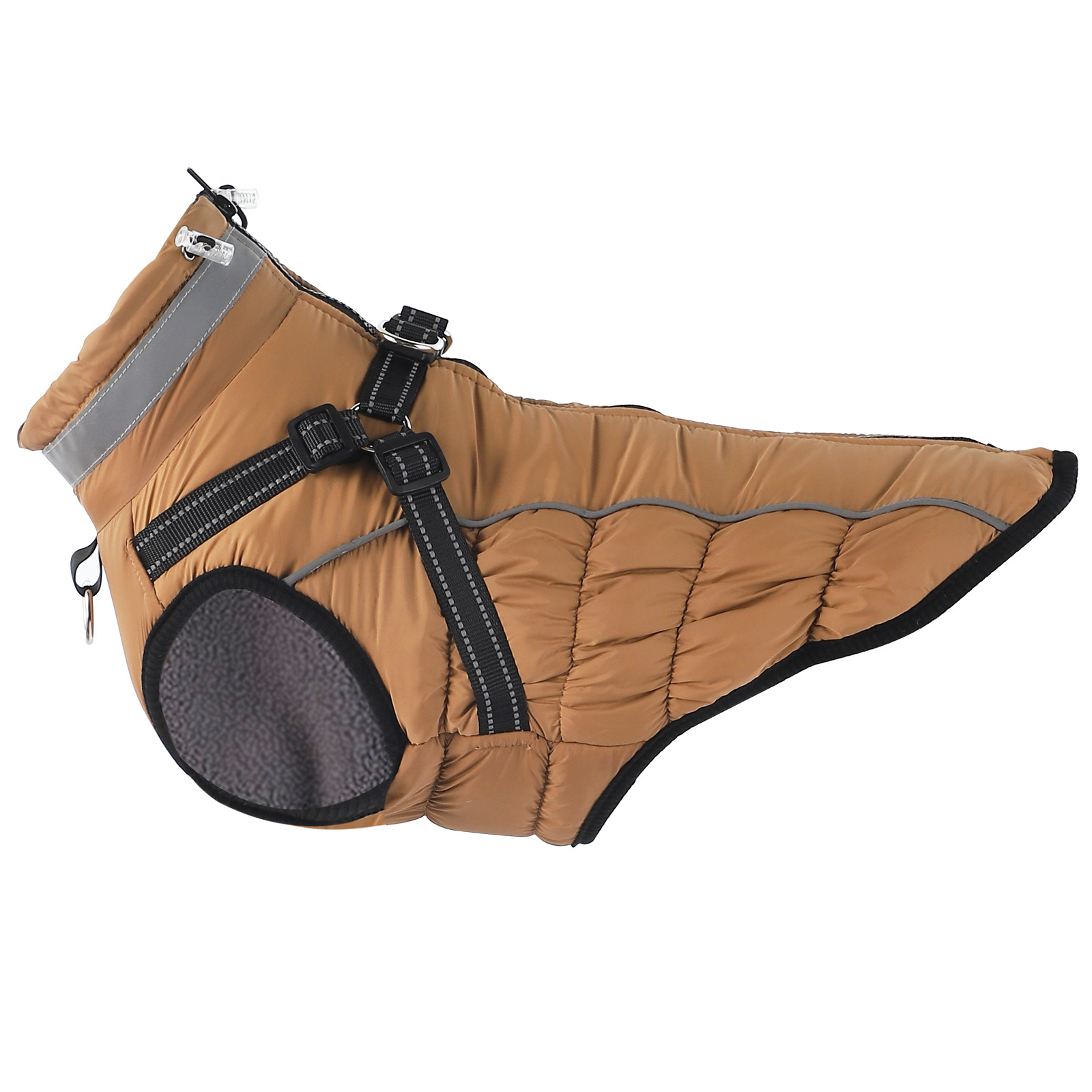
A reflective dog vest covers the largest visible surface on your dog’s body and should be the first piece you buy. Look for 360-degree reflective strips that show from front, back, and both sides — a vest that only reflects from the rear leaves your dog invisible to oncoming traffic. The best reflective dog vest options use high-grade 3M Scotchlite material, which reflects roughly three times more light than cheap silver-coated plastic strips.
Fit matters as much as reflectivity. A vest that rides up behind the shoulders exposes unprotected fur; one that sags underneath can snag on branches. Measure your dog’s chest girth at the widest point, just behind the front legs, and match it to the manufacturer’s size chart rather than guessing from weight alone. Breeds like Greyhounds and Whippets have deep chests and narrow waists that often fall between standard sizes.
2. LED Dog Collar for Active Illumination
An LED dog collar does what reflective material cannot: emit its own light. This matters on unlit trails, in parks without streetlights, and any time your dog ventures more than a leash-length away from you. USB-rechargeable models run six to ten hours per charge, and modern LEDs are bright enough to be visible from quarter of a mile on open ground.
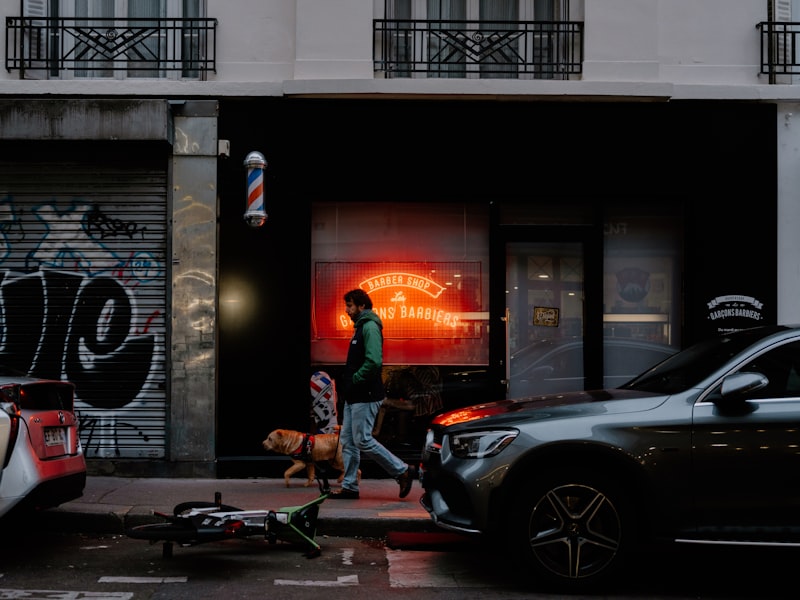
Color matters more than you would think. Red LEDs are easiest on human night vision, so they do not blind you or approaching drivers. Green shows up best against grass and pavement. Blue penetrates fog and rain more effectively than warm colors. Many newer collars let you cycle through modes — solid, slow blink, fast strobe — and a blinking pattern catches peripheral attention faster than a steady light.
3. Reflective Dog Harness vs. Collar
If your dog pulls on the leash, a reflective dog harness is safer than a collar for the neck and also covers more body area for visibility. Y-front or H-style harnesses that sit across the chest and shoulder blades leave the windpipe completely free while spreading reflective material across the torso. Avoid cheap step-in harnesses whose reflective piping is just a thin line along the top strap — they only show up from behind.
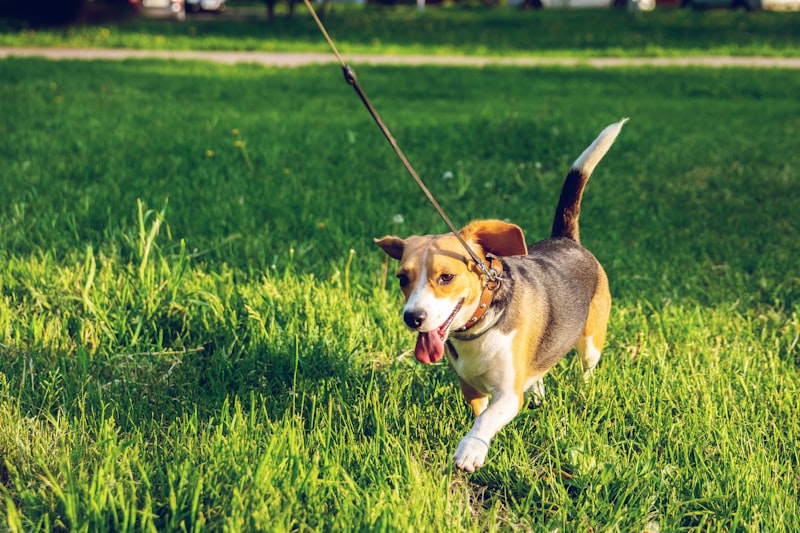
Harnesses with a front clip (the D-ring sits on the chest) also help reduce pulling, which matters after dark when a sudden lunge toward wildlife is harder to anticipate. Combine a reflective harness with a regular flat collar holding ID tags and you cover both jobs — control and identification — without adding bulk.
4. Reflective Dog Leash and Hands-Free Options
A six-foot reflective dog leash completes the visibility triangle — dog, handler, and the line between them. Without it, a driver sees your dog and sees you, but might not register that the two are connected, leading to a car passing between you. Leashes woven with reflective yarn along the full length solve this cleanly.
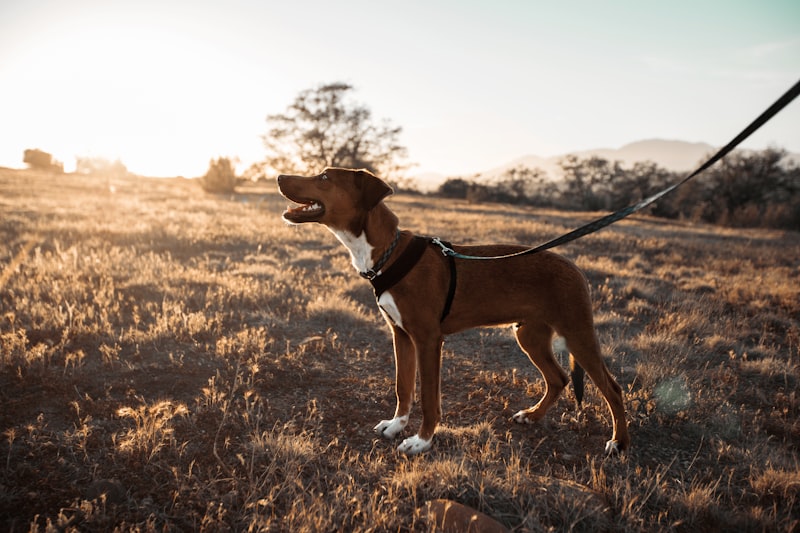
Hands-free belt leashes are worth considering for runners and anyone walking in cold weather when hands stay in pockets. A bungee section absorbs sudden tugs, a quick-release buckle handles emergencies, and a reflective strip along the waist belt keeps you visible from the side — where headlights hit you first at intersections.
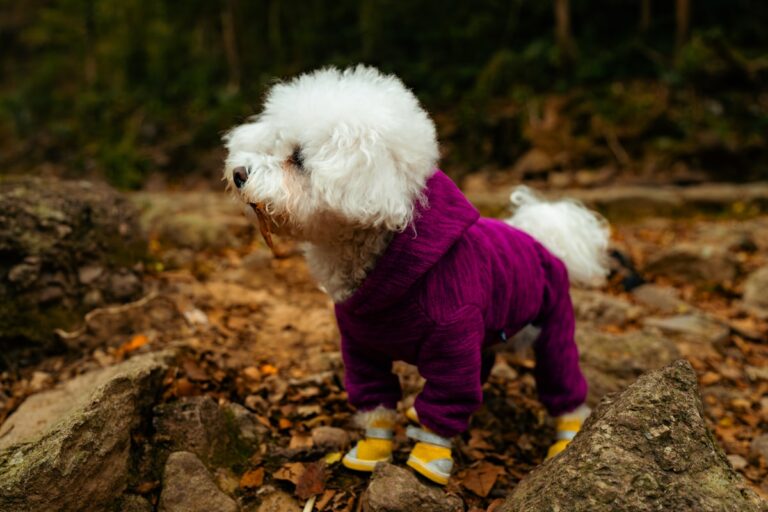
5. Reflective Dog Jacket for Cold-Weather Visibility
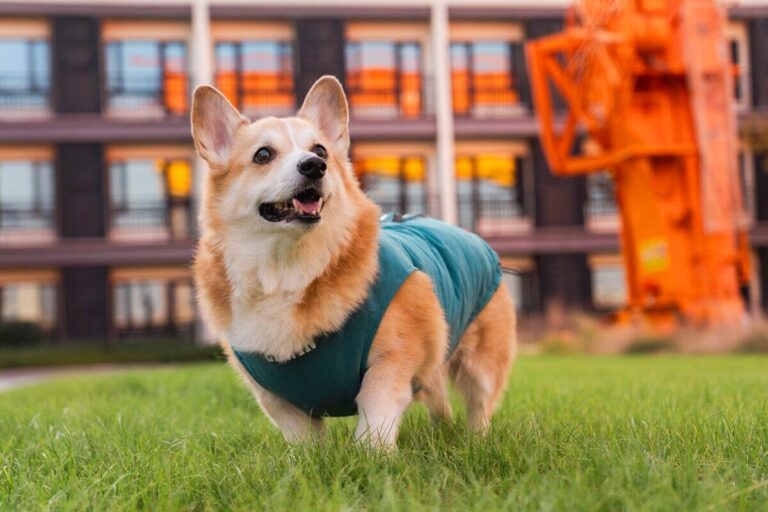
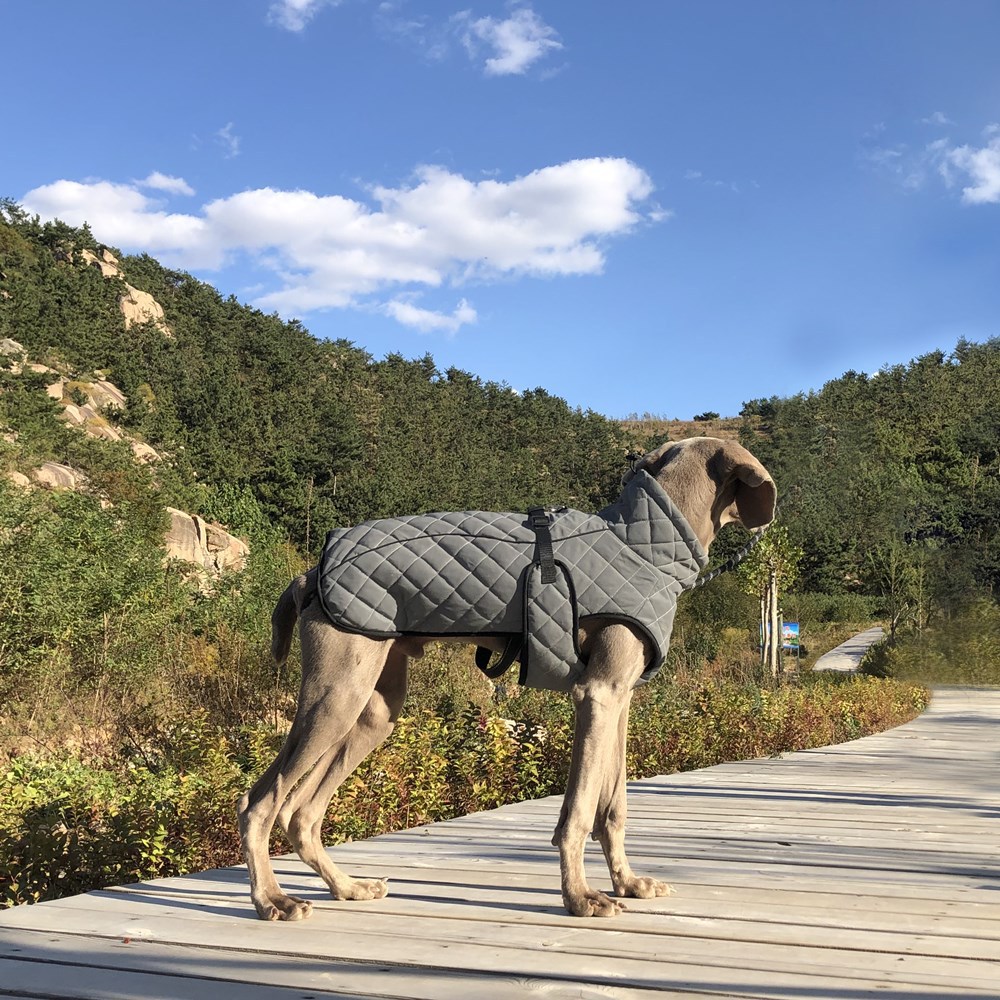
In winter, a reflective dog jacket combines three jobs: insulation, weather protection, and visibility. This matters more than it sounds — cold weather pushes walks earlier in the morning and later in the evening, when daylight is already scarce. A well-designed reflective dog jacket places reflective panels across the shoulders, flanks, and rear, so the dog shows up from every angle without needing additional gear layered on top.
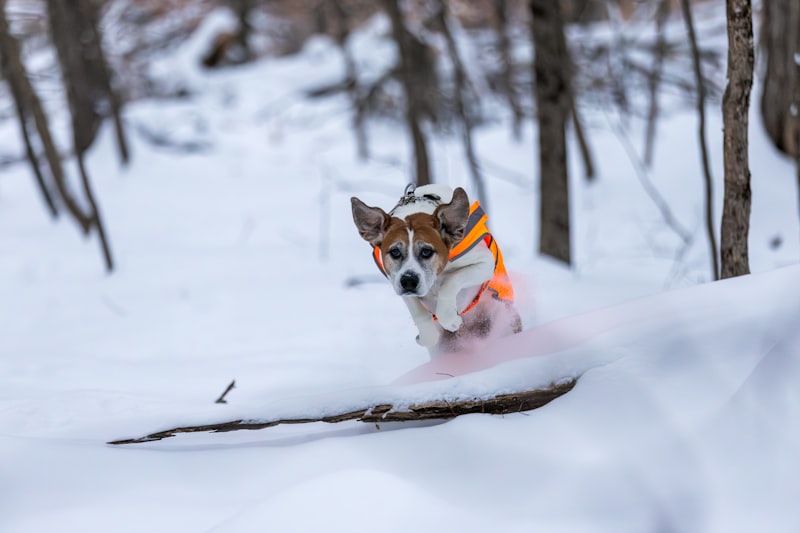
Pair a reflective dog jacket with the right base layers depending on temperature, and check our windproof dog coat guide if you live somewhere that drops below freezing. Short-coated breeds, small dogs, and seniors benefit most — they have less natural insulation and usually walk slower, meaning more time exposed to traffic.
6. Clip-On LED Safety Lights
Clip-on LED safety lights are the cheapest piece of reflective dog gear you can buy — often under ten dollars — and they solve edge cases that vests and collars miss. Clip one to the back of a harness, one to the leash handle, and one to your own jacket zipper. Drivers now see three moving lights instead of one, which reads as a human-plus-dog pair much faster than any single signal.
Look for lights with a proper clip (not just a keyring loop that swings loose), water resistance rated IPX4 or higher, and at least 40 hours of battery life on slow-blink mode. Avoid the cheapest button-cell models whose batteries die without warning after ten walks.
7. Reflective Collar Leash Covers and Add-Ons
If you already have a leash and collar you like, slip-on reflective covers add visibility without replacing gear. Silicone sleeves with printed reflective patterns slide onto almost any standard leash. Velcro-backed reflective bands wrap around collar webbing or harness straps to upgrade an older setup.
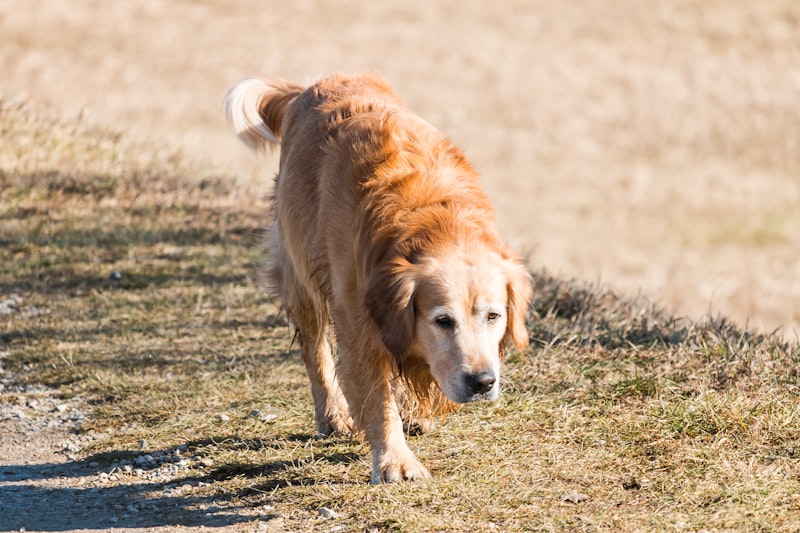
These add-ons also help if your dog wears multiple collars throughout the week — a day collar with ID tags, a training collar for specific walks — because you can move the reflective bands as needed. They are also great for visiting dogs you pet-sit, where buying a full reflective dog harness for a three-night stay does not make sense.
8. Reflective Ankle Bands and Boots
Reflective ankle bands on the legs catch low headlight beams that pass under a raised vest or harness. In tall grass, against snow banks, or on curbs where a car’s lights are aimed downward, leg reflectors can be the only visible part of the dog. Look for Velcro bands with a soft backing — stretchy neoprene bands tend to slide off while running.
If your dog already wears boots for pavement protection, winter traction, or paw sensitivity (see our dog paw care guide), pick a pair with reflective trim. Each stepping leg flashes independently, creating a distinctive motion pattern that drivers recognize as a living creature rather than roadside debris.
9. A Reflective Hi-Vis Harness-and-Leash Combo for Bad Weather
For true worst-case conditions — heavy rain, pre-dawn fog, snowstorm walks — a fluorescent-yellow-plus-reflective combo is the gold standard. Fluorescent colors (sometimes called “safety yellow” or “hi-vis yellow”) are visible in daylight and twilight when retroreflection alone is not enough, and the reflective tape takes over once full darkness falls. Construction workers use this exact combination for a reason, and the same principle works for dogs.

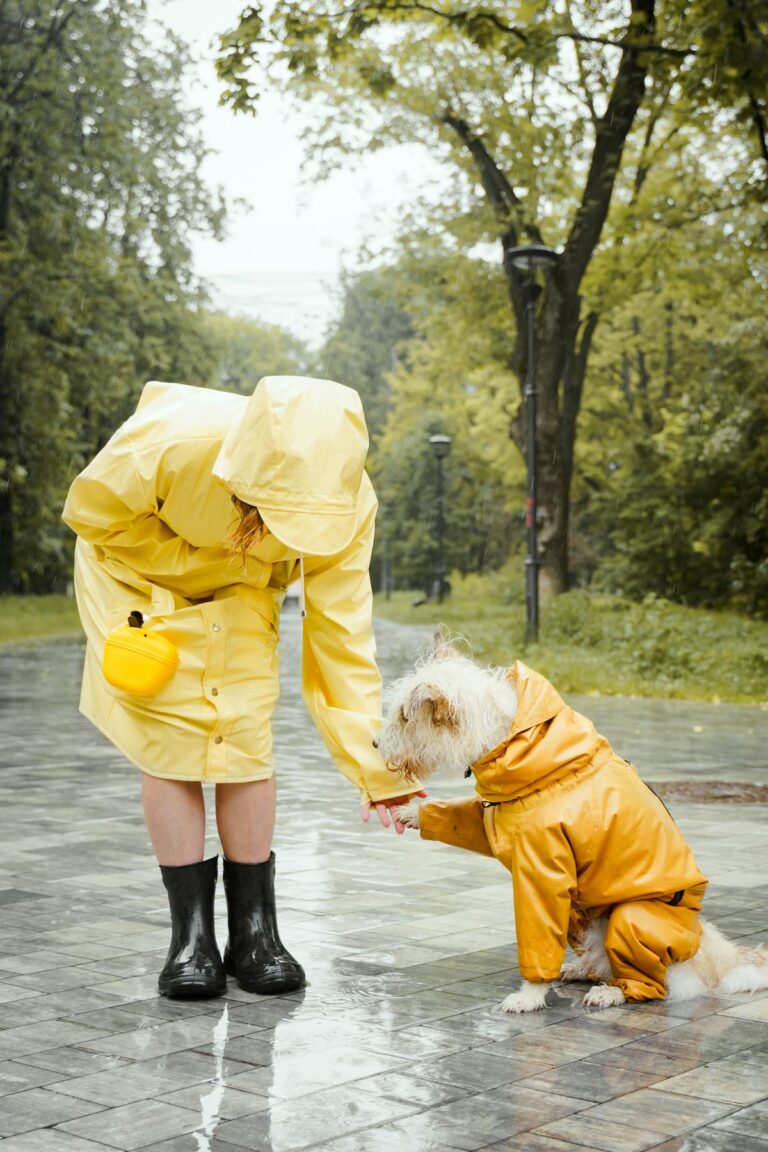
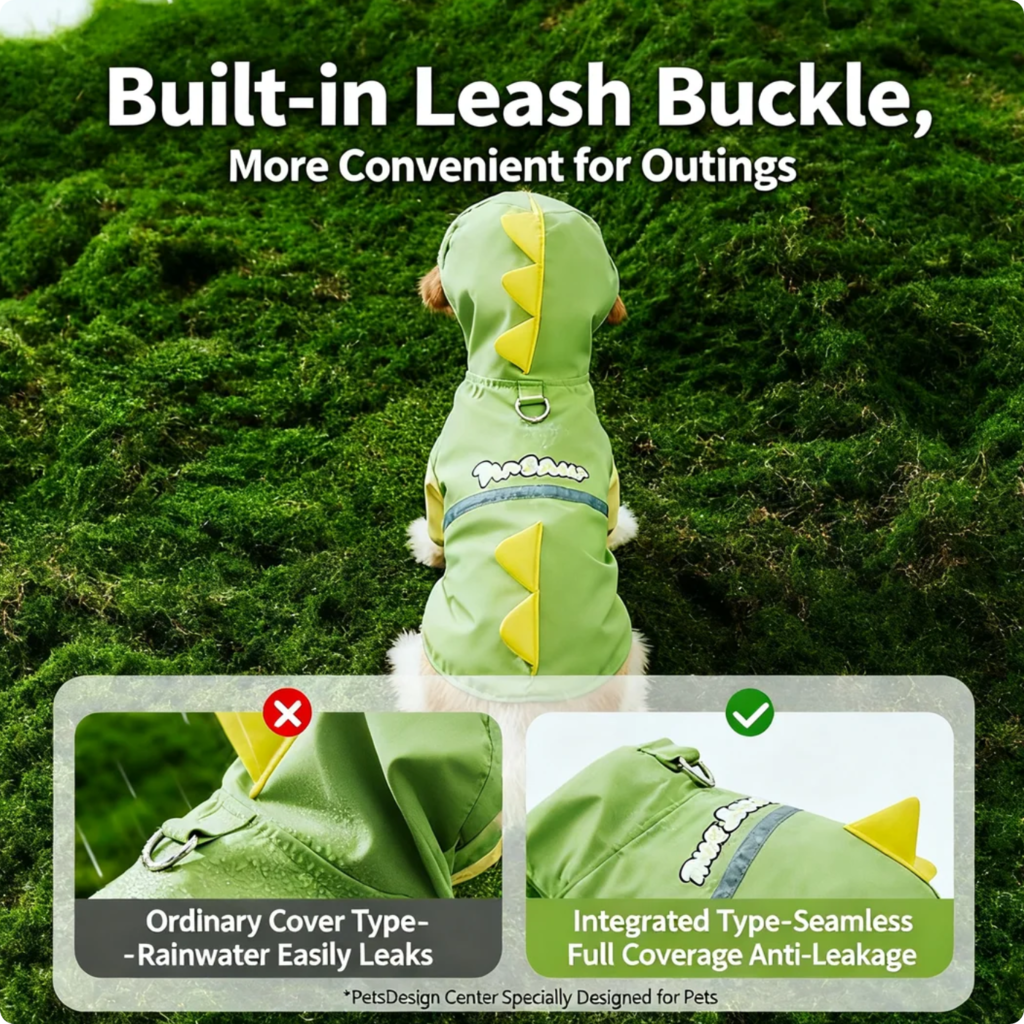
Bad-weather gear should be waterproof, wind-resistant, and easy to wipe clean — wet wool or cotton mats quickly and holds cold against your dog’s skin. Reflective raincoats with snap-on hoods protect the ears and top of the head. Our full dog raincoat guide breaks down the tradeoffs between lightweight shells and insulated winter rain jackets.
How to Layer Reflective Dog Gear Without Overdoing It
More gear is not always better. Piling on a vest plus a jacket plus a harness plus three LED clips can overheat your dog, restrict movement, and cause the equipment to tangle on itself. The right layering is purpose-driven: pick one high-coverage piece (vest or jacket), one active light source (LED collar or clip-on), and one connection piece (reflective leash). That covers 360 degrees of visibility without creating a wearable obstacle course.
For short potty breaks around a lit neighborhood, a simple LED collar plus your existing leash is enough. For a 45-minute walk along a road with fast traffic, add the reflective vest. For rural trails or pre-dawn runs, layer all three and add ankle bands. Match the gear to the risk, not the other way around.
Common Mistakes That Cancel Out Reflective Gear
Even good reflective dog gear fails if you misuse it. Dark-colored human clothing next to a bright reflective dog creates a weird half-silhouette that drivers sometimes misread as roadside junk. Wear something reflective yourself — a vest, a headlamp, or reflective patches on running shoes.
Retractable leashes extend so far from your body that drivers cannot tell the dog and handler are connected, which defeats the whole point of a reflective leash. Six-foot fixed leashes are standard for a reason: they keep the dog within a predictable bubble around you. See our spring dog walking guide for more on leash choices.
Dirty reflective tape loses up to 70% of its retro-reflectivity, so wipe panels clean after muddy walks. Bleach, detergent, and high-heat drying all break down the microprism layer — hand wash in cool water and air dry instead.
Reflective Dog Gear Buying Checklist
Before clicking buy on any piece of reflective dog gear, run through this checklist. It saves most of the common fit, safety, and longevity problems.
- Reflectivity grade: 3M Scotchlite or equivalent, not generic silver coating
- Coverage: reflects from front, rear, and both sides — not just one direction
- Fit: measured against chest girth, neck, and length, not just weight
- Closures: buckles and clips that stay secure but release fast in emergencies
- Weather rating: waterproof or water-resistant if your climate needs it
- Weight and flexibility: your dog should move naturally, not waddle
- Return policy: crucial for sizing, especially for odd-proportioned breeds
For general walking-season prep beyond visibility, our essential dog walking equipment guide covers collars, poop bags, and first-aid basics that round out any kit.
Watch: Picking Reflective Gear for Night Walks
When to Replace Reflective Dog Gear
Reflective materials degrade with UV exposure and flex fatigue. A vest worn daily for two years may only reflect at half its original brightness, even if it still looks fine to your eyes. Test yours at night: stand 50 feet from your parked car with headlights on, and have a partner crouch where your dog would stand. If the reflective tape does not flash back visibly bright, replace it.
LED collars and lights last as long as the electronics hold up — typically two to four years of daily use. Replace rechargeable lights when the runtime per charge drops below half the original spec, because batteries often fail without warning. Inspect straps, clips, and D-rings monthly for wear, especially on any gear that holds a leash under pull.
Reflective dog gear is cheap insurance against the one scenario no owner wants to think about. Start with a vest and an LED collar, add a reflective leash, and upgrade the rest as the seasons change. Your dog does not care about fashion. Your dog cares about another sunset walk — and the driver up the street cares whether they can see you both in time.
Sources
- Federal Highway Administration — Research on pedestrian visibility and retroreflective materials at night
- NHTSA Pedestrian Safety — National statistics on nighttime pedestrian fatalities and visibility factors
- American Kennel Club — Safety tips for walking dogs in low-light and dark conditions
- 3M Scotchlite Technology — Background on retroreflective tape performance grades
- American Veterinary Medical Association — General pet care and outdoor safety recommendations